Table of Contents
ToggleWhy Need a Hammer Mill Machine and Its Benefits
Whether you are involved in farming, biomass processing, recycling, mining, or feed manufacturing, an industrial hammer mill can significantly streamline your workflow. It helps convert raw materials such as wheat, maize, rice husk, sawdust, wood chips, and other agricultural or industrial waste into fine and uniform particles. This uniformity is extremely important for further processes like pelletizing, briquetting, feed production, or material blending.
Let’s explore why every business needs a hammer mill and its major benefits.
What Is a Hammer Mill Machine?
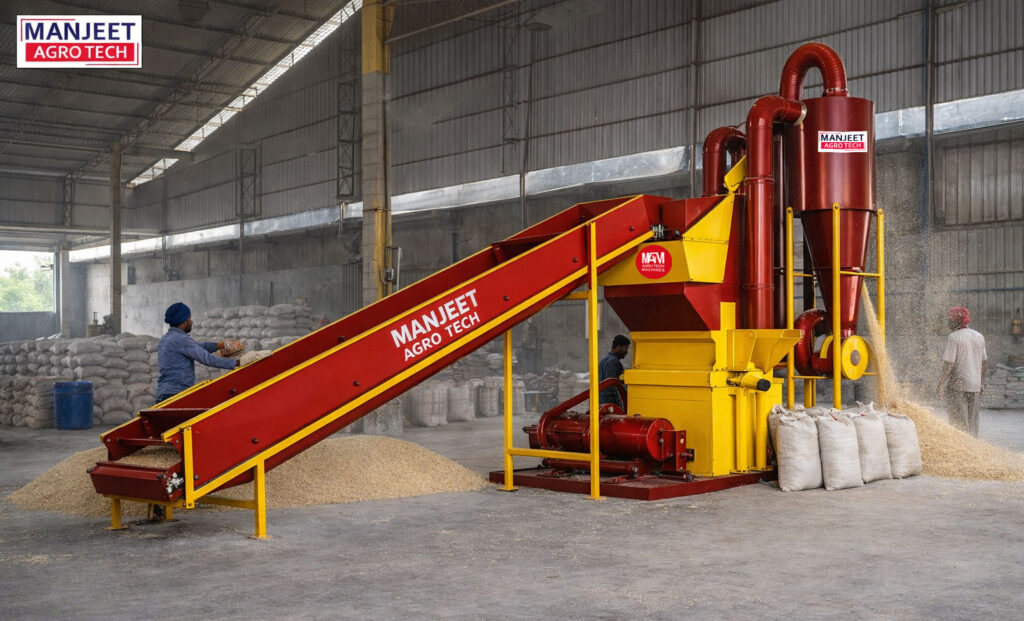
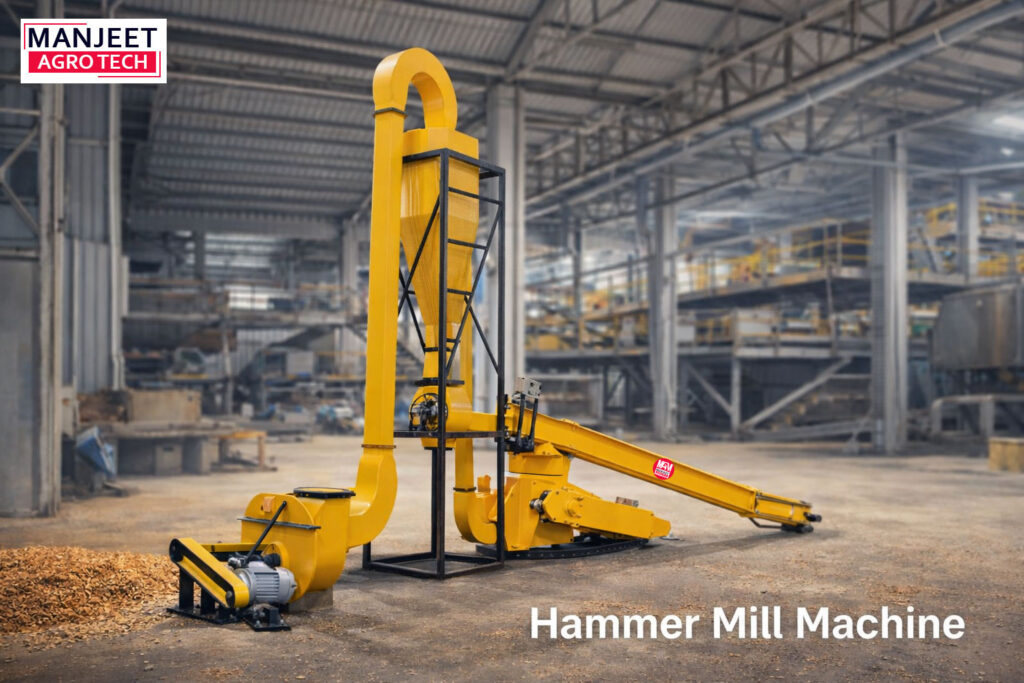
A hammer mill machine for agro waste Briquetting Machine is a powerful industrial grinding machine used to crush, grind, and pulverize various types of materials into smaller, uniform particles. It works on the principle of high-speed impact. Inside the machine, rapidly rotating hammers strike the raw material repeatedly until it breaks down into the desired size. The ground material then passes through a screen, which controls the final particle size.
Hammer mills are widely used in agricultural, industrial, and biomass processing sectors because of their efficiency and versatility. They can process materials such as wheat, maize, rice husk, corn, wood chips, sawdust, straw, and other agricultural or industrial waste. Due to this flexibility, the hammer mill has become an essential machine in feed mills, pellet plants, briquette plants, recycling units, and even mining industries.
How Does a Hammer Mill Work?
A hammer mill machine works using a high-speed rotary impact mechanism to crush, grind, and pulverize materials into smaller particles. Unlike compression-based crushers, a hammer mill machine with blower system reduces size mainly through repeated impact force, combined with attrition and shear.
Because of this powerful mechanism, a hammer mill crusher is widely used in agriculture, feed processing, mining, biomass production, pharmaceuticals, and recycling industries.
The Basic Working Principle of a Hammer Mill
The working principle of a hammer mill machine is based on three main forces:
-
Impact
-
Shear
-
Attrition
When material enters the grinding chamber, it is struck by rapidly rotating hammers attached to a rotor. The impact shatters the material into smaller pieces. The material continues to collide with the hammers, breaker plates, and other particles until it becomes small enough to pass through the screen.
This continuous impact process makes the industrial hammer mill extremely efficient for high-volume production.
Top Benefits of a Hammer Mill Machine
A hammer mill machine is one of the most widely used pieces of equipment in material processing industries. From agriculture to mining and recycling, this powerful machine plays a crucial role in reducing large materials into smaller, manageable sizes. Its efficiency, durability, and versatility make it a preferred choice for businesses looking to enhance productivity and reduce operational costs.
Below are the top benefits of a hammer mill machine explained in detail.
1. High Efficiency and Fast Processing
One of the biggest advantages of a hammer mill machine is its high-speed performance. The rotating hammers inside the machine crush and grind materials quickly and efficiently. This rapid processing capability helps businesses save time and increase overall production output. Whether processing grains, biomass, or minerals, a hammer mill ensures consistent and fast results.
Key Points:
-
High-speed crushing mechanism
-
Increases production rate
-
Saves time in large-scale operations
-
Delivers consistent particle size
2. Versatility in Material Processing
Hammer mill machines are designed to handle a wide range of materials. From agricultural crops like corn and wheat to industrial materials like coal, wood chips, and minerals, these machines offer unmatched versatility. This adaptability makes them suitable for multiple industries including agriculture, food processing, pharmaceuticals, and recycling.
Key Points:
-
Processes different types of materials
-
Suitable for various industries
-
Adjustable settings for different particle sizes
-
Handles both dry and semi-dry materials
3. Cost-Effective Operation
Investing in a hammer mill machine can significantly reduce operational costs. The machine requires relatively low maintenance and consumes less energy compared to many other grinding systems. Its simple design also reduces the chances of mechanical failure, leading to lower repair costs and longer service life.
Key Points:
-
Low maintenance requirements
-
Energy-efficient performance
-
Durable and long-lasting design
-
Reduced downtime and repair costs
4. Easy Maintenance and Operation
Hammer mills are known for their simple and user-friendly design. The structure allows easy access to internal components, making maintenance and part replacement straightforward. Operators can quickly replace worn-out hammers or screens without complicated procedures, ensuring smooth and continuous operation.
Key Points:
-
Simple machine structure
-
Easy replacement of parts
-
Minimal technical expertise required
-
Reduced maintenance time
5. Adjustable Output Size
Another major benefit of a hammer mill machine is the ability to control the final particle size. By changing the screen size or adjusting operational settings, users can achieve the desired level of fineness. This flexibility is particularly useful in industries where precise material size is critical.
Key Points:
-
Customizable particle size
-
Replaceable screens
-
Consistent and uniform output
-
Suitable for specific production needs