
Diesel Alternative for Crisis Times
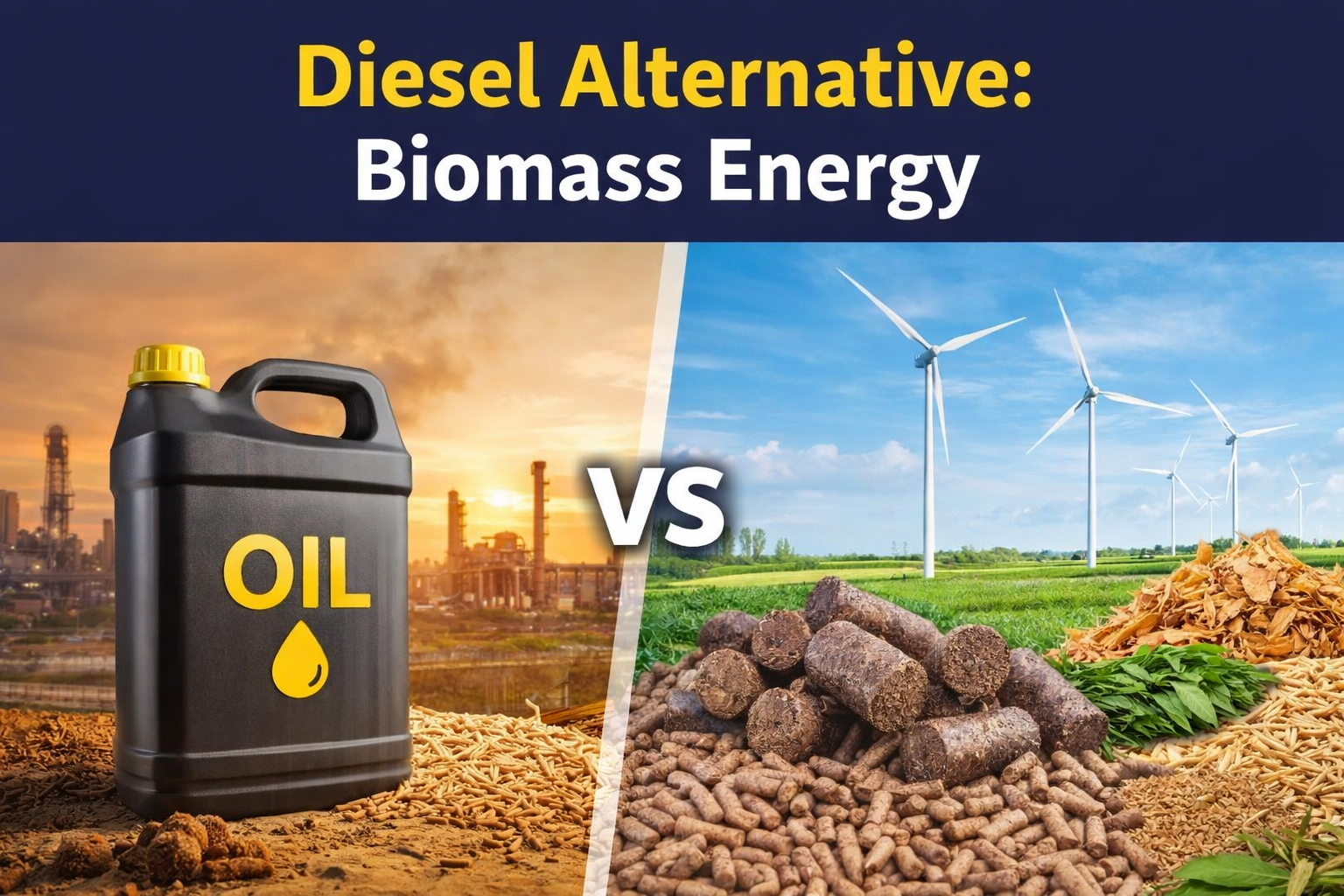
Global energy markets are facing intense pressure. We are navigating a unique “war-time” scenario characterized by volatile fuel prices, disrupted supply chains, and mounting climate change concerns. Countries and corporations alike face serious challenges regarding long-term energy security.
Industries and households urgently need a reliable alternative to traditional fossil fuels like diesel. You cannot simply halt production or turn off the heat when imported oil prices spike. This is where biomass energy steps in as a powerful, practical, and highly scalable solution to secure our power needs.
Here is a comprehensive look at why biomass energy is replacing diesel, how it transforms organic waste into steady power, and why local fuel generation is our best defense against global supply shocks.
The Core Problem: Our Heavy Reliance on Diesel
Diesel has historically served as the backbone of both industrial operations and rural household power. Businesses rely heavily on massive diesel generators for backup power and run industrial boilers on this liquid fuel. Meanwhile, transportation networks and rural heating systems consume millions of gallons daily.
However, depending so heavily on diesel carries severe risks. The biggest issue is the high cost driven by heavy import dependency. When global conflicts or economic crises occur, diesel supply chains fracture, causing prices to skyrocket overnight.
Furthermore, diesel combustion releases massive amounts of carbon dioxide and harmful pollutants into the atmosphere. In an era where governments mandate strict emissions reductions, running heavy industrial equipment on diesel is becoming legally and financially unsustainable. Businesses and communities must shift toward local, renewable energy sources to survive and thrive.
What is Biomass Energy and Why Does it Matter Now?
Biomass energy comes from organic materials that store sunlight. Common sources include agricultural waste like rice husks and crop straw, wood chips, sawdust, animal manure, and forestry residues.
During their lifespan, plants absorb solar energy through photosynthesis. When we process or burn these organic materials, they release that stored energy as heat or electricity.
The most crucial advantage of biomass energy is its local availability. Unlike crude oil, which must be extracted, refined, and shipped across oceans, biomass raw materials exist in abundance right in our backyards. During a geopolitical crisis or supply chain collapse, local farms and timber mills continue to produce organic waste. This localized supply completely shields users from global fuel shortages.
-
Biomass vs. Diesel in Industrial Applications
Heavy manufacturing requires immense, uninterrupted power. Biomass is proving to be a highly capable replacement for diesel across several major industrial sectors. -
Powering Boilers and Steam Generation
Textile mills, paper manufacturers, and food processing plants require massive amounts of continuous heat and steam. Running traditional boilers on diesel is incredibly expensive and highly polluting. By switching to biomass systems, these industries drastically cut their daily operational costs. Biomass briquettes and wood pellets drop right into modernized boilers, providing a cleaner, much cheaper heat source that completely bypasses the volatile diesel market. -
Reliable Power Generation
Most commercial facilities maintain large diesel generators for emergency power. However, running these units during extended grid outages drains financial resources quickly. Modern biomass-based power plants solve this problem by generating continuous, baseload electricity. Large factories can set up captive biomass plants to run their operations entirely off the main grid, utilizing local agricultural waste to keep the lights on and the machines running. -
Transforming Brick Kilns and Manufacturing
Brick kilns and heavy manufacturing plants traditionally relied on low-grade coal and dirty diesel to maintain high furnace temperatures. This practice coated surrounding communities in thick, toxic smoke. Today, these facilities are rapidly transitioning to biomass briquettes. This switch not only cuts their fuel budget but also helps them meet strict government pollution controls without sacrificing production capacity.
The Game Changer: Biomass Wood Pellet Briquettes
Loose agricultural waste is difficult to transport and burns inconsistently. Engineers solved this problem by inventing the biomass wood pellet briquette.
Manufacturers take loose organic waste, remove the moisture, and compress it under extreme pressure. The result is a dense, uniform block of fuel that boasts an incredibly high energy output.
These briquettes act as a direct replacement for coal and diesel. Because they contain very low moisture, they burn exceptionally clean and efficiently. They are also easy to stack, store, and transport on standard shipping pallets. This innovation is the primary reason large-scale industries are adopting biomass power so rapidly.
-
Biomass Energy for Residential Use
Biomass does not just power massive factories. It offers incredible benefits for everyday households, particularly in rural or developing regions. -
Cleaner Cooking Alternatives
In many rural areas, families still cook over open fires using raw wood or rely on expensive LPG cylinders. Raw wood creates dangerous indoor air pollution, leading to severe respiratory issues. Modern biomass cookstoves offer a much healthier alternative. These stoves use compressed pellets to create a clean, highly efficient burn with virtually no smoke, protecting family health while eliminating the need for fossil fuels. -
Efficient Heating Solutions
Families living in colder climates spend a fortune keeping their homes warm with diesel or electric heaters. Biomass provides a highly efficient space heating solution. Automated pellet heaters feed wood briquettes into a combustion chamber, providing steady, comfortable heat throughout the winter at a fraction of the cost of heating oil. -
Small-Scale Power Generation
Farms and rural households can achieve total energy independence through small biogas plants. By collecting animal waste and allowing it to decompose in a sealed tank, families generate methane gas. They can pipe this gas directly into their kitchens for cooking or use it to run small electrical generators, creating a completely self-sufficient home ecosystem.
Environmental and Strategic Advantages
Shifting from diesel to biomass provides massive benefits that extend far beyond simple cost savings.
First, biomass energy operates on a carbon-neutral cycle. While burning organic matter does release carbon dioxide, it only releases the exact amount the plant absorbed while it was growing. This creates a net-zero emission cycle, unlike fossil fuels which pull new carbon out of the earth and pump it into the atmosphere.
Second, it solves a massive waste management crisis. In many agricultural regions, farmers burn leftover crop stubble in open fields, causing catastrophic seasonal air pollution. By turning that waste into fuel briquettes, we eliminate field burning entirely.
Finally, biomass creates true energy independence. Countries can stop draining their economies to import expensive foreign oil. Instead, they keep that money local, paying farmers and facility workers to produce energy right at home.
Navigating the Challenges of Biomass Adoption
While the benefits are clear, transitioning to a biomass-powered economy does come with a few hurdles.
Collecting and transporting loose agricultural waste can be logistically complex and expensive. The industry is solving this by building briquette pressing facilities right next to major farming hubs, minimizing transport distances.
Additionally, setting up a new biomass power plant or industrial boiler requires a significant initial financial investment. Fortunately, many governments now offer substantial tax subsidies and grants to help businesses offset these upfront costs.
The final barrier is simple awareness. Many factory owners simply do not realize how efficient modern biomass technology has become. Stronger educational campaigns and supportive government policies are essential to accelerate this transition.
The Future: Biomass as a Strategic Global Fuel
Looking ahead, the case for biomass energy only grows stronger. Fossil fuels will inevitably become more expensive and harder to extract. Climate regulations will continue to tighten, forcing heavy polluters to adapt or shut down.
Biomass energy represents a unique opportunity, particularly for developing nations with massive agricultural sectors. It boosts rural economies by turning waste into a cash crop, provides heavy industry with a reliable, cheap fuel source, and guarantees national energy security during times of global crisis.
Conclusion
Relying on imported diesel in our current volatile global environment is a massive financial and operational risk. Price spikes, supply chain disruptions, and environmental damage make it clear that industries and households must find a better way to power their lives.
Biomass energy offers a practical, scalable, and fully sustainable solution. From running massive industrial boilers to keeping rural homes warm and well-lit, organic fuel provides a reliable safety net against global uncertainty. By embracing biomass wood pellet briquettes and modern conversion technologies, we can solve our waste management problems, reduce our carbon footprint, and secure our energy future using the resources right in our own backyards.
Take a close look at your own energy consumption today. Whether you manage a large manufacturing facility or simply want to lower your home heating bills, explore local biomass fuel providers and take your first step toward true energy independence.